As industries race toward decarbonization and energy independence, pyrolysis bio-oil is emerging as a powerful alternative to fossil fuels. Produced through the oxygen-free thermal conversion of biomass, municipal waste, and end-of-life materials, bio-oil represents a cleaner, circular solution for industrial energy needs.
With innovations from companies like United Earth Energy, including advanced Containerized Pyrolysis Systems and Mobile Pyrolysis Units, industries can now produce renewable fuels directly from local waste streams—turning liabilities into assets.
Dive into the future of green energy with United Earth Energy’s containerized pyrolysis systems. Converting waste into bio-oil, syngas, and biochar through thermal decomposition, this tech offers a cleaner alternative to fossil fuels. Join us to explore its on-site benefits for heavy industries, transport, and power generation, driving ESG success and carbon neutrality. Listen to unlock decentralized sustainability!
What Is Pyrolysis Bio-Oil?
What Is Pyrolysis Bio-Oil? Pyrolysis bio-oil is a renewable liquid fuel generated when organic materials are heated in the absence of oxygen. Unlike incineration, which burns waste and releases high levels of CO₂ and pollutants, pyrolysis thermally decomposes feedstocks into valuable outputs:
- Biochar (solid carbon for sequestration and soil enhancement)
- Syngas (clean gaseous fuel)
- Bio-Oil (liquid renewable fuel)
The resulting bio-oil can be used as a substitute for heavy fuel oil, bunker fuel, or even refined further into advanced biofuels—making it a cornerstone of sustainable industrial operations.
Why Industries Are Turning to Pyrolysis Bio-Oil
Why Industries Are Turning to Pyrolysis Bio-Oil stems from growing regulatory pressures, carbon reduction mandates, and volatile fossil fuel markets. Industries are seeking:
- Lower carbon footprints
- Energy cost stability
- ESG compliance
- Circular economy integration
Bio-oil addresses these needs by transforming waste into energy, reducing reliance on imported fuels, and supporting carbon accounting initiatives.
Key Industrial Applications for Pyrolysis Bio-Oil
1. Industrial Boilers and Steam Generation
Industrial Boilers and Steam Generation represent one of the most immediate applications of pyrolysis bio-oil. Many factories rely on heavy fuel oil or coal to produce steam for manufacturing processes.
Bio-oil can:
- Replace fossil-based heating fuels
- Reduce sulfur emissions
- Lower greenhouse gas outputs
- Maintain high thermal efficiency
Industries such as food processing, textiles, pulp and paper, and chemical manufacturing can integrate bio-oil into existing boiler systems with minimal modification.

2. Cement Kilns and High-Temperature Furnaces
Cement Kilns and High-Temperature Furnaces require continuous high-energy inputs. Traditionally powered by coal or petroleum coke, these systems are major carbon emitters.
Bio-oil offers:
- Renewable high-heat fuel
- Reduced lifecycle carbon intensity
- Diversification of fuel sources
By co-firing bio-oil with conventional fuels, cement manufacturers can significantly reduce their Scope 1 emissions while maintaining production capacity.
3. Marine and Heavy Transport Fuels
Marine and Heavy Transport Fuels are under increasing scrutiny due to international emissions standards. Pyrolysis bio-oil can be upgraded into marine-grade fuels, supporting:
- Cleaner shipping operations
- Reduced sulfur oxide emissions
- Alignment with IMO sustainability targets
As global logistics shifts toward greener fuels, bio-oil presents a scalable transitional solution.
4. Power Generation and CHP Systems
Power Generation and Combined Heat and Power (CHP) Systems benefit from bio-oil’s compatibility with turbines and generators. When paired with syngas, facilities can operate hybrid renewable systems.
Benefits include:
- On-site electricity production
- Energy resilience
- Lower grid dependency
- Carbon credit eligibility
5. Chemical and Biofuel Upgrading
Chemical and Biofuel Upgrading is an emerging field where pyrolysis bio-oil is refined into higher-grade fuels and chemical feedstocks. Through catalytic upgrading and hydroprocessing, bio-oil can become:
- Renewable diesel
- Sustainable aviation fuel (SAF)
- Green chemical intermediates
This makes pyrolysis not just a waste solution—but a feedstock engine for the bio-based economy.
Environmental and ESG Advantages of Bio-Oil
Environmental and ESG Advantages of Bio-Oil make it particularly attractive for corporations pursuing sustainability reporting and carbon neutrality goals.
Key advantages include:
- Reduced lifecycle emissions compared to fossil fuels
- Diversion of waste from landfills
- Methane reduction
- Carbon sequestration via biochar co-products
- Improved ESG ratings and reporting metrics
Organizations integrating pyrolysis solutions can demonstrate measurable progress toward:
- Net Zero commitments
- Circular supply chains
- Waste-to-energy initiatives
- Sustainable procurement standards
The Role of Containerized Pyrolysis Systems
The Role of Containerized Pyrolysis Systems is transforming how industries deploy waste-to-energy technology. Unlike traditional centralized plants, modular systems offer flexibility, scalability, and rapid deployment.
Companies like United Earth Energy are leading this transition with innovative Containerized Pyrolysis Systems that bring industrial-scale capabilities into compact, transportable units.
Advantages include:
- On-site waste processing
- Reduced transportation emissions
- Modular scalability
- Lower capital investment
- Rapid installation
United Earth Energy’s Uni Box Containerized Pyrolysis Systems
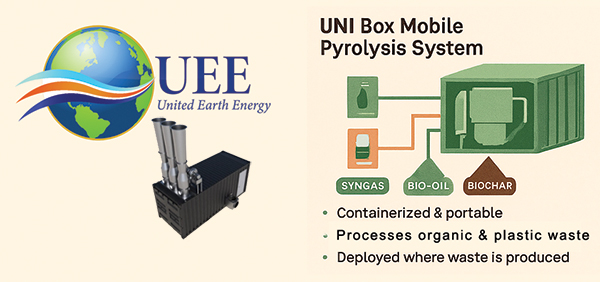
United Earth Energy’s Uni Box Containerized Pyrolysis Systems represent a breakthrough in decentralized waste-to-energy solutions. Designed as a Mobile Pyrolysis Unit, the Uni Box enables industries, municipalities, and remote operations to convert waste into valuable energy products directly at the source.

Key Features of the Uni Box:
- Containerized design for mobility and quick deployment
- Processes biomass, plastics, tires, and municipal waste
- Produces biochar, syngas, and bio-oil simultaneously
- Self-sustaining energy model using syngas output
- Scalable for industrial or community applications
By deploying a Mobile Pyrolysis Unit, organizations can:
- Reduce waste disposal costs
- Generate renewable fuel for internal use
- Create carbon credit opportunities
- Strengthen ESG reporting
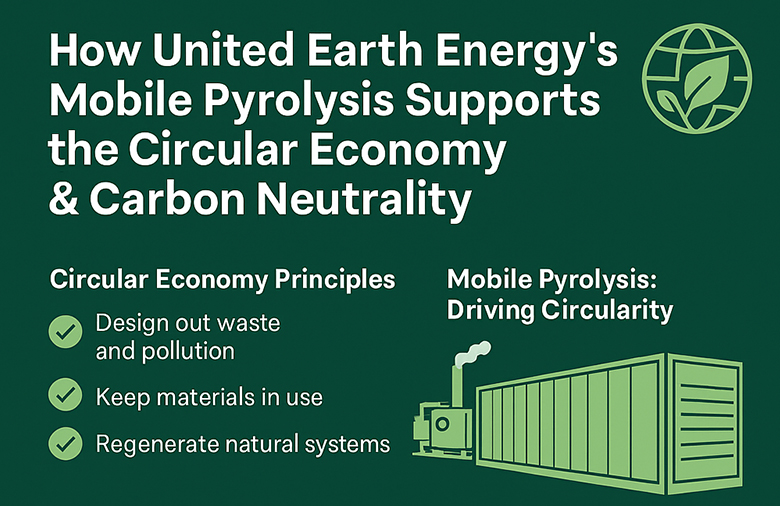
- Support local circular economies
The Uni Box exemplifies how Containerized Pyrolysis Systems are accelerating the transition from centralized waste facilities to localized energy ecosystems.
Bio-Oil vs. Traditional Fossil Fuels
Bio-Oil vs. Traditional Fossil Fuels highlights the performance and environmental contrasts shaping industrial decision-making.
| Feature | Fossil Fuel Oil | Pyrolysis Bio-Oil |
|---|---|---|
| Source | Non-renewable | Waste-derived renewable |
| Carbon Impact | High emissions | Lower lifecycle emissions |
| Waste Reduction | None | Diverts waste from landfill |
| Energy Security | Import-dependent | Locally produced |
| ESG Alignment | Limited | Strong sustainability fit |
Bio-oil offers industries a path toward resilience and sustainability without sacrificing operational performance.
The Future of Industrial Energy
The Future of Industrial Energy lies in decentralized, circular, and carbon-conscious solutions. As carbon pricing mechanisms expand and fossil fuel volatility persists, industries must adopt adaptive technologies.
Pyrolysis bio-oil is uniquely positioned to:
- Enable carbon-neutral production
- Convert waste streams into revenue streams
- Power heavy industry responsibly
- Strengthen energy independence
With innovators like United Earth Energy delivering scalable Mobile Pyrolysis Units and Containerized Pyrolysis Systems, the industrial sector can transition from waste management to resource regeneration.
Conclusion: Bio-Oil as the Next-Generation Industrial Fuel
Bio-Oil as the Next-Generation Industrial Fuel is not just an emerging trend—it’s a strategic energy shift. From cement plants to shipping fleets, industries are recognizing the value of converting waste into high-performance renewable fuel.
Through advanced pyrolysis technologies and modular systems like the Uni Box, companies can reduce emissions, enhance ESG performance, and create resilient, circular energy ecosystems.
The future of industrial energy is renewable, decentralized, and waste-powered—and pyrolysis bio-oil is leading the way.
👉 Learn more about innovative Containerized Pyrolysis Systems and the Mobile Pyrolysis Unit at:
https://unitedearth.energy
Contact United Earth Energy
📞 Ready to take the next step toward sustainable energy and waste reduction?
Contact United Earth Energy today to learn how our Uni-Box Mobile Pyrolysis System can help you turn waste into renewable resources—right at the source. Whether you’re managing agricultural byproducts, municipal waste, tires, or industrial residues, our scalable, mobile solution is built to meet your needs on-site and on-demand.